The Dejbjerg Wagon

The Dejbjerg wagon, is a composite of two ceremonial wagons, and was ritually placed in the bog, near Ringkøbing in western Jutland, Denmark. around 100 BCE.

Two wagons were dismantled and laid in a peat bog, fenced in with branches and wattles.

The iron in the carriage bodies was forged from continental mountain ore, and the carriages are believed to be made in central Europe by Celtic artisans.

In the first century BC Tacitus, the Roman writer, describes the use by the Germani of sacred carriages. He wrote:
"that they universally join in the worship of Nerthus; that is to say, Mother Earth. They believe she interposes in the affairs of man, and drives around to the various peoples. On an island in the Ocean stands a sacred grove, and in it stands a chariot dedicated to the goddess, covered over with a curtain. Only one priest may touch it. He senses when the goddess is present, and with profound veneration attends the motion of the chariot, which is always drawn by yoked cows. Then it is that days of rejoicing always ensue, and in all places whatsoever which she descends to honour with a visit and her company, feasts and recreation abound."

The wagon body is ornamented with male faces with curly hair and moustache.
1st Cent BCE Dejbjerg wagon - made in a Celtic workshop in southern Germany or northeastern France.


Tutankhamun's trumpets

Tutankhamun's trumpets were found in 1922 by Howard Carter during the excavation of Tutankhamun's tomb.

Engraved with decorative images of the gods Ra-Horakhty, Ptah, and Amun, the trumpets are considered to be the oldest operational trumpets in the world.

One of the trumpets is made of sterling silver and one of bronze or copper.

The trumpets were sounded during an international BBC broadcast aired on 16 April 1939. This being the first time the trumpets were played for over 3,000 years.
Ancient Egyptian trumpet, mute and bells.
Tutankhamun was about 8-9 years of age when he ascended the throne and became pharaoh. He was buried in a tomb that was unusually small for his status. There were 5,398 items found in the tomb, including a solid gold coffin, thrones, face mask, archery bows, sandals, trumpets, a lotus chalice, gold toe stalls, furniture, food, wine, and fresh linen underwear.
Detail of the throne of King Tutankhamun that was found in his tomb (KV62) at the Valley of the Kings
Tutankhamun ruled from 1333 BCE until his death in 1323 BCE.

The Ancient City of Memphis

Located at the entrance of the Nile delta, 20km south of Cairo, Memphis was the first capital of the unified kingdom of Upper and Lower Egypts.

According to the historian, Herodotus, Memphis was founded around 3100 BC by Menes, a pharaoh of the first dynasty of ancient Egypt. 

In Ancient Egypt, Memphis was also known as Ankh Tawy ("That which binds the Two Lands").

Later Memphis was known as Inbu-Hedj, meaning "White Walls", as the city was built of mud bricks which were painted white and would gleam in the sunlight.

The name Memphis, however, is a Greek translation of the Egyptian name Men-nefer, a nearby pyramid built in the 6th Dynasty.

During its 300 years of history, Memphis was an important administrative and religious centre, located strategically on a narrow part of the Valley, which enabled traffic control and the ability to resist invasions.

The Temple of Ptah (god of craftsman and architects) also turned Memphis into an important religious centre. And it was also the place where the Pharaohs were crowned.

Interestingly, many of the pyramids near Cairo were built in the period when Memphis was the most important city in Egypt and possibly the world.

In 2240 BCE, Thebes, the city of Luxor today, replaced Memphis as the capital city.

Memphis was abandoned by the 7th century CE and the remains of temples and other buildings were used in the construction of the city of Cairo.
Memphis, Egypt, in 1924
In the Bible, Memphis is called Moph or Noph.

A 3,200-year-old statue of Ramesses II was discovered in 1820 at the Great Temple of Ptah near Memphis. It is made from red granite and weighs 83 tons.

The open-air museum of Memphis displays artefacts from the ancient ruins, including statues and an enormous colossus of Ramses II.
A colossal statue of Ramesses II,in the Open-Air Museum at Memphis, Egypt.
Memphis Open Air Museum, Egypt


Ancient Artwork Under a Turkish House

In a Turkish village art from the Neo-Assyrian Empire was found carved into the limestone bedrock in a chamber below a house.

The authorities learned about the ancient chamber after Looters raided it for treasures in 2017, by creating a hole in the first floor of a two-story house in the village of Bashbuk, Turkey.

The figures of Assyrian deities, with names written in Aramaic, are displayed on a chamber carved into limestone bedrock which stretches for 98 feet (30 meters).

The procession of deities is led by Hadad, a storm god, with a three-pointed lightning rod and headdress with a five-pointed star. Next, is the goddess Atargatis, a fertility deity with a star-encrusted cylindrical double-horned crown. Six others follow, in various stages of completion.

Some 2,800 years ago, when the art was created, the Neo-Assyrian Empire was the dominant power in the region.

The looters were sent to jail. 

And the full extent of the underground complex is yet to be discovered.
Chamber under a two-story house in the village of Bashbuk, Turkey

The Lion-Human: One of The Oldest Statues Ever Discovered

In 1939, geologist Otto Völzing found a fragmented mammoth ivory figurine at Hohlenstein-Stadel cave in Germany.

Robert Wetzel, a prehistoric historian who had led the excavation, continued digging at the cave site until 1961 and found other fragments. Further fragments were found during the 1970s.

These fragments were stored at the Museum Ulm for the next thirty years until archaeologist Joachim Hahn began to assemble the more than 200 fragments. 

A figurine with animal and human features, began to emerge.

In 1982, paleontologist Elisabeth Schmid further restored and reinterpreted the statue. Work was finally completed on the statue in late 2013.

Sculpted from mammoth ivory, this standing human figure with a lion's head (Löwenmensch figurine), was found to be between 35,000 and 40,000 years old, based on carbon dating.

This Ice Age masterpiece, made by a highly skilled and creative individual, is one of the oldest statues ever discovered.
The 40,000 years old Löwenmensch (Lion man) figurine

We Will Eat Grass, Even Go Hungry, But We Will Have Our Own Nuclear Bomb

Abdul Qadeer Khan died in 2021 in Islamabad, Pakistan. Prime Minister of the time, Imran Khan, called him a "national icon." Fellow scientist Dr Samar Mubarakmand claimed that Khan was a national treasure.

Back in the 1970s, Khan set Pakistan on the path to becoming a nuclear weapons power. 

Born in 1936, Khan emigrated from India to Pakistan. In 1956 he earned a Bachelor of Science, then continued further with his studies.

After receiving his doctorate in metallurgical engineering from Belgium in 1972, Khan joined the Physics Dynamics Research Laboratory, based in Amsterdam, to conduct studies on uranium.

After learning about Operation Smiling Buddha, India's first successful nuclear bomb test on 18 May 1974, Khan contacted Pakistan's then-Prime Minister Zulfikar Ali Bhutto, offering technology for Pakistan's own nuclear weapons program.

Bhutto replied: "We (Pakistanis) will eat grass, even go hungry, but we will have our own (nuclear bomb)."

Pakistan's nuclear weapons program was then largely built by Khan from uranium centrifuge designs stolen from Holland and various dodgy suppliers.

Alarmingly, khan later admitted to selling nuclear secrets to North Korea, Iran and Libya.

Back in the 1970s, Frits Veerman, a Dutch technician working with Khan, reported to his superiors that Khan appeared to be stealing nuclear documents, materials and technology. He was told to be quiet and later lost his job.

So, Abdul Qadeer Khan was free to use Dutch knowledge to develop the atomic bomb for Pakistan and sell nuclear information to North Korea, Iran and Libya.

The Robot Servant of Philon: Around 3rd century B.C.E

The first known robot was called "The Servant of Philon". It was an ancient Greek humanoid figure capable of automatically filling a wine cup when placed in its hand.

The Greek engineer, Philo of Byzantium, also known as Philo Mechanicus, lived during the latter half of the 3rd century B.C.E. (more than 2,200 years ago)

One of his many inventions was a human-like robot in the form of a maid, who held a jug of wine in her right hand.

A mechanism in the robot stopped the cup from overfilling, and when it was about half-full, the left hand gradually lowered, and the flow of wine would stop. The right hand would begin the flow of water, mixing water with your wine.

You could then allow the cup to fill or pick it up earlier if you did not want so much water in your wine. The hand would stop pouring by itself.

The robot was a complex construction consisting of containers, tubes, air pipes, and winding springs, which interacted through variants in weight, air pressure, and vacuum. This is the oldest known robot created by humans.
The first known robot was called "The Servant of Philon". It was an ancient Greek humanoid figure capable of automatically filling a wine cup when placed in its hand

More information here

You can visit the Kotsana Museum in Athens, Ancient Olympia, Katakolo and Crete. Here

When Humans and Other Animals First Used Fire

Fire has been used by humans in rituals, agriculture for clearing land, for cooking, for warmth and light, and protection from predators and mythological spirits.

Control of fire by humans involves the acquisition of these three cognitive stages: conceptualization of fire, ability to control fire, and ability to start a fire.

There is generally accepted evidence of "microscopic traces of wood ash" from controlled fires used by Homo erectus from 1 million years ago.

Fossils of Homo sapiens found in Morocco dating back about 300,000 years also revealed burnt flint blades in the same layer as the skulls.

In South Africa at Pinnacle Point, two types of silcrete tools were developed between 60,000 and 80,000 years ago, using a heat treatment technique from fire. There is evidence to suggest the technique may have been known as early as 164,000 years ago.
Bifacial silcrete point from Blombos Cave, South Africa, Middle Stone Age (71,000 BCE) (scale bar = 5cm). Vincent Mourre / Inrap - Own work
Evidence of the widespread use of controlled fire by anatomically modern humans dates to approximately 125,000 years ago.

There is evidence that Black Kites and some Australian native birds create fires by carrying burning twigs in their talons and dropping them away from the original wildfire, to flush out prey.
 Black Kite, Lara, Victoria. fir0002 flagstaffotos [at] gmail.com Canon 5D II + Canon 400mm f/5.6 L - Own work

The Ancestors of Virtually all Modern Animals


The Burgess Shale was discovered by palaeontologist Charles Doolittle Walcott, in 1909, in western Canada.

The remarkably well-preserved fossils found here, in black shales, are about 508 million years old.

It was not until 1962 that serious investigations began of the strange and diverse remains of creatures from the Cambrian Period (roughly 542 million to 505 million years ago). 

The fossils found in the Burgess Shale include the ancestors of most modern animals.

These animals lived during what we call “The Cambrian Explosion”.

Many of these organisms went extinct. But those that didn't diversified into many more species during the Cambrian period.

The basic body types of the major animal phyla (about three dozen) that exist today were established over a relatively short period of about 10 million years from these Cambrian faunas.

Burgess Shale fossils show exceptional soft-body preservation that are not usually preserved in normal conditions.

Trilobites are very common fossils in the Burgess Shale. These are hard-bodied bug-like creatures that lived on the seafloor for almost 300 million years until they went extinct before the era of dinosaurs.
Olenoides Trilobite Fossil, at the Burgess Shale, Canada, is about 350mm long and 530 million years old
Hallucigenia is a genus of Cambrian animals found in the Burgess Shale. The name reflects its unusual appearance and history. The Hallucigenia was later recognised as part of lobopodians, Paleozoic panarthropods from where velvet worms, water bears and arthropods arose.
Hallucigenia is a genus of Cambrian animal resembling worms, known from articulated fossils in Burgess Shale-type deposits in Canada
A combination of environmental factors probably contributed to this evolutionary burst.

Homeobox genes,  master genes controlling the formation of muscles, nerves, or glands, are similar in all species. The mutations that give rise to these master genes may only be advantageous in the earliest, simplest animals.

The Burgess Shale has contributed greatly to the understanding of the origins of animals on Earth.
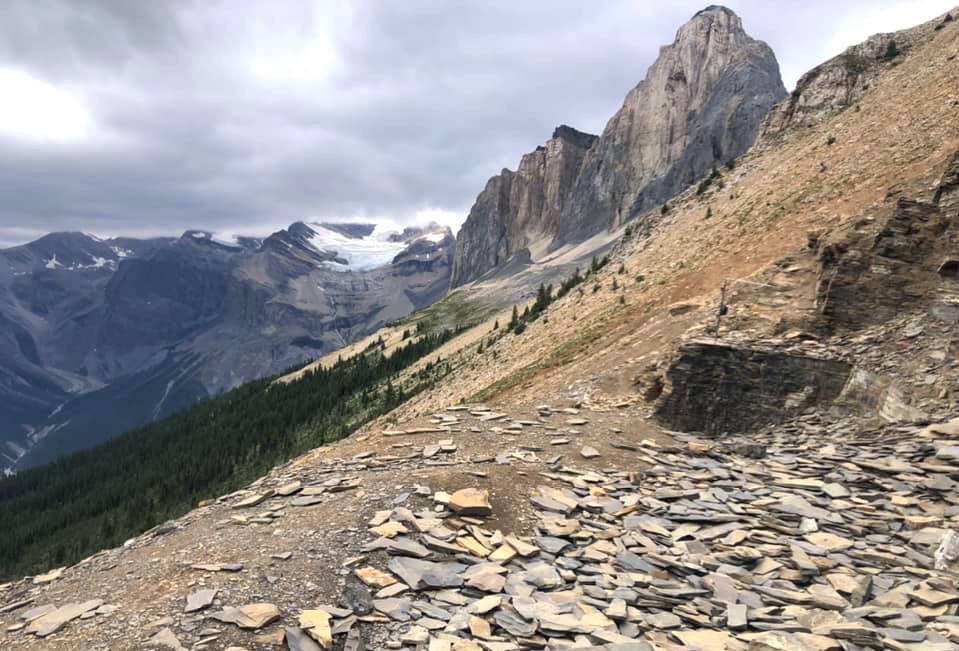
At Walcott Quarry, Burgess Shale, Canada
Burgess Shale formation of British Columbia, Canada

Interesting, Ancient Toilets

Mesopotamia

The earliest known internal pit toilet, with clay pipes and sewers, comes from the Mesopotamian city of Uruk, dating to c.3200 BCE.

Skara Brae

Skara Brae, the largest island of Orkney, Scotland, consists of a c.3000 BCE village, with a number of small houses without roofs. Each house had a toilet, with a sewer system, draining effluent to the ocean.
Neolithic Orkney, Skara Brae

Indus Valley Civilisation

The pipe below is part of the remains of a drainage system from Lothal, Gujarat, the Indus Valley Civilisation (northwestern India and Pakistan), from c 2500 BCE. Houses of the city drained water to a central sump outside of the city.
A drainage system from Lothal, Gujarat, the Indus Valley Civilisation (C.2500 BC).

Jerusalem

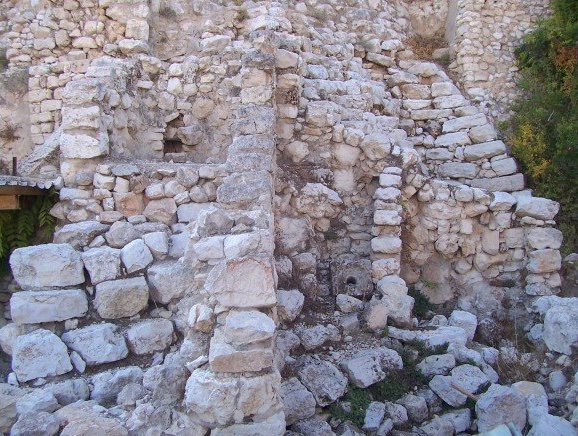
A stone toilet that is 2700 years old, was found in the Armon Hanatziv neighbourhood of Jerusalem, made of carved limestone.
A stone toilet that is 2700 years old, in the Armon Hanatziv neighborhood of Jerusalem

Vietnam

In southern Vietnam, at the Rạch Núi archaeological site, a toilet has been found dating back to 1500 BCE

Rome

Almost every city in ancient Rome had large public latrines. However, it was the Etruscans who constructed the first underground sewers in the city of Rome around 500 BCE.

For example, at Ostia Antica, 25 kilometres southwest of Rome, public latrines lie along 3 walls, with washbasins between 2 entry doors near the Forum.

The public sit on holes cut into marble. Under the seats, a deep channel flowing from the drain of one of the Public Thermal Baths would take away waste.
At Ostia Antica, 25 kilometres southwest of Rome, public latrine lie along 3 walls

An Ancient Multi-Level Underground City

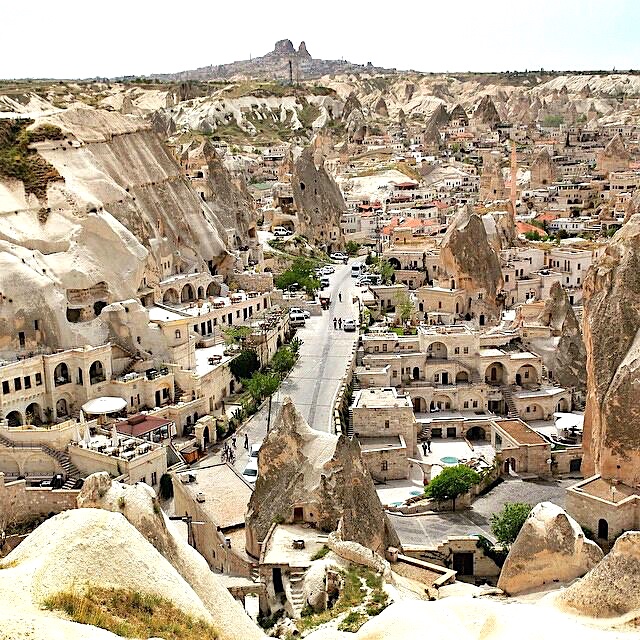
Located in Central Turkey, Cappadocia, is a place of dramatic valleys, rock formations and naturally formed caves.

The Cappadocian Greeks arrived in the mountainous regions of Cappadocia after the conquest of Anatolia by Alexander the Great and developed their own culture. 

The original populations of Cappadocia, which included the Hittites, also became Greek-speaking over time. 

It is known that the region of Cappadocia was inhabited in prehistoric times. However, the first underground cities in Turkey were mentioned by Xenophon of Athens:

Their houses were underground, with a mouth like that of a well, but below they spread out widely. Entrance ways were dug for the herd animals, but the people descended by ladder. In the houses there were goats, sheep, cattle, birds, and their children. Inside, all the animals were kept fed on a diet of fodder.
— Xenophon 4.5.25

One of the Diadochoi (“successors”) of Alexander the Great, Eumenes, became a Satrap (governor of a province) of Cappadocia and established Greek settlements in the region. 

Eumenes installed his friends in charge of cities, appointed garrison commanders and organised the administrative and legal system. 

There are around 40 cities in total in Cappadocia, with only a few open to the public.

By 1st century AD, most of the Greeks had become Christian. 

Cappadocians were involved in the affairs of the Eastern Catholic Church at Constantinople. For example, Maurice Tiberius (582–602) served as Emperor.

To protect themselves from foreign invasion, rock-cut buildings were constructed below and above ground, including whole cities. 

The few entrances were hidden by rocks or foliage. Inside, intricate passageways were like a labyrinth and difficult to navigate.

Doorways were sealed with large rock doors. In some places, holes in the ceiling enabled the attack of intruders with spears.

The largely unexplored city of Özkonak had about nineteen levels and 60,000 inhabitants.

By the eleventh century, about three thousand churches had been carved in the rocks.

Richard MacGillivray Dawkins, a Cambridge linguist, undertook fieldwork in Cappadocia from 1909 to 1911. He recorded in 1909 that "When the news came of the recent massacres at Adana, a great part of the population at Axo took refuge in these underground chambers, and for some nights did not venture to sleep above ground."

In 1923, the Christian inhabitants of the Cappadocia region were expelled from Turkey and moved to Greece.

In 1969 the site opened to visitors.
Cappadocia region, Turkey
 Underground passasges, Cappadocia region, Turkey
Cappadocia region, Turkey


Welsh Settlement in The Ukraine

A Welsh engineer was the founder of one of Ukraine's largest cities, Donetsk.

John Hughes, a successful businessman born in Merthyr Tydfil, Wales, in 1814, made his money and reputation by developing armour plating for ships.
John James Hughes (1814 – 17 June 1889) was a Welsh engineer
In 1868, Hughes was the manager of the Millwall Iron Works, London, when Alexander II, the Russian Tsar, ordered plating for a naval fortress being built at Kronstadt on the Baltic Sea, from Hughes.

The Tsar was very interested in Hughes' knowledge and expertise, which led to an opportunity for Hughes to develop his own metal works in eastern Ukraine (part of the Russian Empire), including a factory for forging railway lines.

In 1869, Hughes acquired a piece of land to the north of the Azov Sea and formed a new company.

Hughes sailed with eight ships, in 1870, to the place where the new town would be established, carrying equipment and about a hundred ironworkers, miners and their families, mostly from South Wales.

The new town, based around ironworks and collieries, would be called Hughesovka, after its "creator".
John Hughes' home in Hughesovka, c.1900
Colliery and coke ovens at Hughesovka, Russian Empire, 1912
It was the Russian Revolution of 1917 that changed everything. As the metalworks fell to the Bolsheviks, many Welsh workers were forced to return home to Wales. 

The name Donetsk was adopted in 1961.

The Ukrainian government lost control of Donetsk to Moscow-backed separatists after the Russian invasion of Crimea in 2014.

From April 2014, the area has been part of the so-called “Donetsk People’s Republic”.

With a population of about one million people, Donetsk is now part of the broader Russo-Ukrainian War (2022).

 Other names for the town have been Aleksandrovka, Yuzivka (or Hughesovka), Stalin and Stalino.
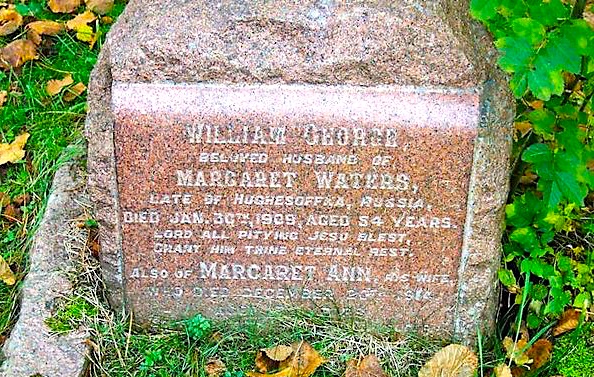
“William George beloved husband of Margaret Waters, late of Hughesoffska, Russia”.
Ruins of John Hughes' house, Donetsk (Hughesoffska)

The Oldest Gold Treasure and Jewellery

The Varna Necropolis is a large burial site about 4 km from the city centre of Varna, Bulgaria.

The site was accidentally discovered in October 1972. According to radiocarbon dating, the artefacts found in this cemetery are 6,500 years old.

So far, 294 graves have been found in the necropolis, but not all the graves were buried with treasure. This is the first evidence of social hierarchies in history.

Some graves have no skeletal remains but contain the richest grave gifts (cenotaphs).

The grave of a man, Grave 43, revealed more gold than has been found in the entire rest of the world for this millennium (5000-4000 BC), from all over the world. This includes Mesopotamia and Egypt.(Slavchev 2010).

Laying on his back, the man's skeleton was decked out with bangles, necklaces of gold beads, gold pendants, and golden disks. 

The high-status male, buried with large amounts of gold, also held a war axe or mace and wore a gold penis sheath.

Referred to as the “Varna gold”, the find includes 3000 gold artefacts, with a weight of approximately 6 kilograms. Also, found were about 600 pieces of pottery, including some painted with gold, high-quality flint and obsidian blades, beads, and shells.

The male-dominated Varna culture had sophisticated religious beliefs about the afterlife and developed hierarchical status differences. But the settlement appears to have been abandoned.

Settlements and cultures that flourished during the Copper Age in modern-day Bulgaria, Romania, Moldova, Serbia, Macedonia, and Ukraine, disappeared or were suddenly abandoned about 4000 b.c.

These were the first cultures to invent metallurgy in Europe. They were mining, working with kilns and trading with distant lands.

For the following six centuries, the region seems deserted after large-scale population shifts. 

Theories about the rapid changes include migrations/invasions from the Eurasian steppes and climate change.

The artefacts can be seen at the Varna Archaeological Museum and at the National Historical Museum in Sofia, Bulgaria.
Reconstruction of elite burial at the Varna necropolis (detail) Zde
Example of the Varna Treasures
Varna Treasure, Varna Archaeological Museum